A Day in the Life of a Tea Leaf
Making Sunrise High Mountain Oolong
In late April we returned to our family garden on Alishan to document one day of spring tea — from branch to tin.
Every photo here was taken on site that day. Nothing staged; just the road a tea leaf actually travels.
Morning in the Garden
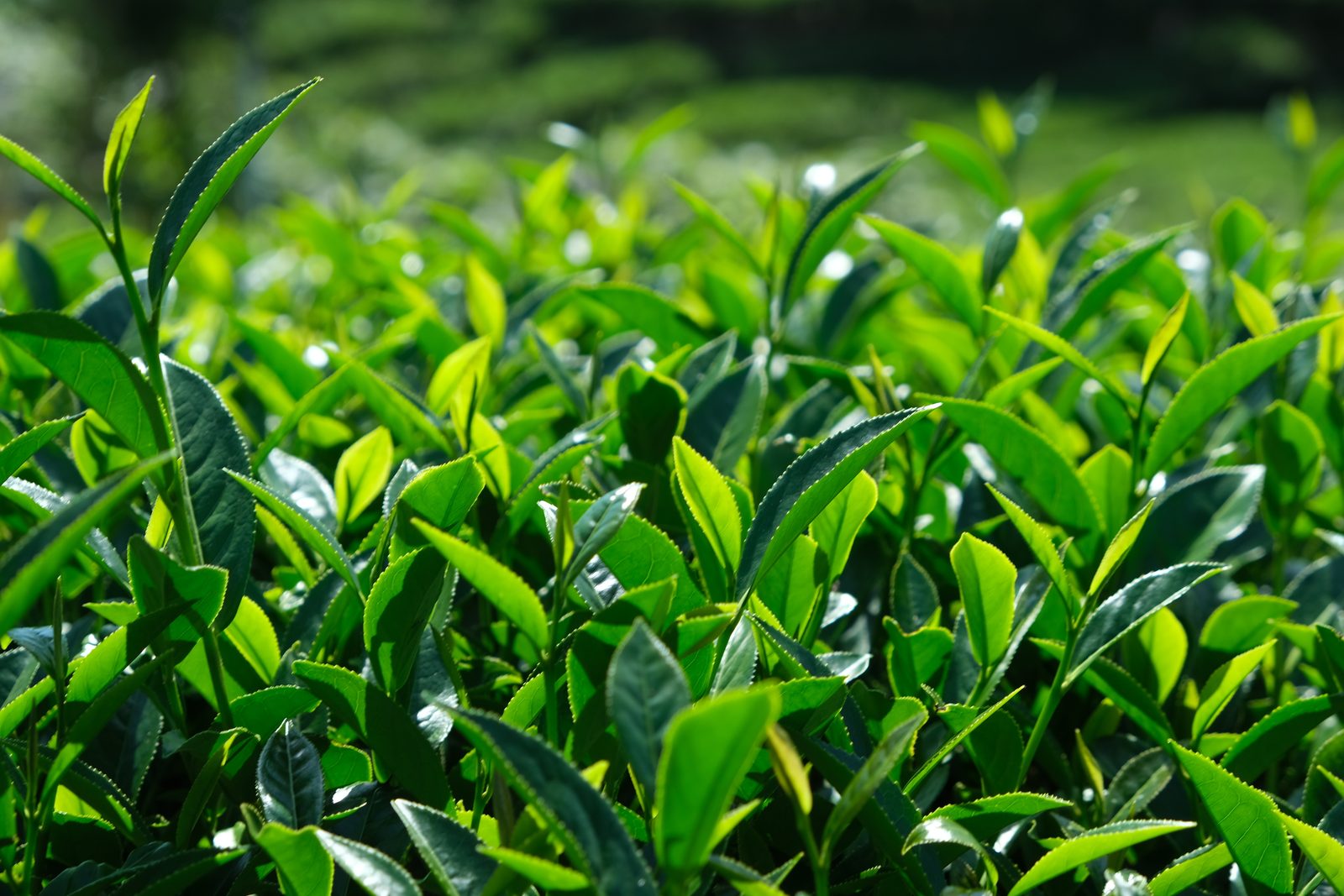
Mornings come quietly in the high mountains. Our gardens sit on Lishan and Alishan, from 1,400 up to 2,200 meters, soaked in cloud and mist year round; the wide swing between day and night makes the bushes grow slowly, building thick leaves with less bitterness and more sweetness. The mountain writes the first draft of the flavour. Dew still on, leaves glossy — today this spring tea leaves the branch.
Picking
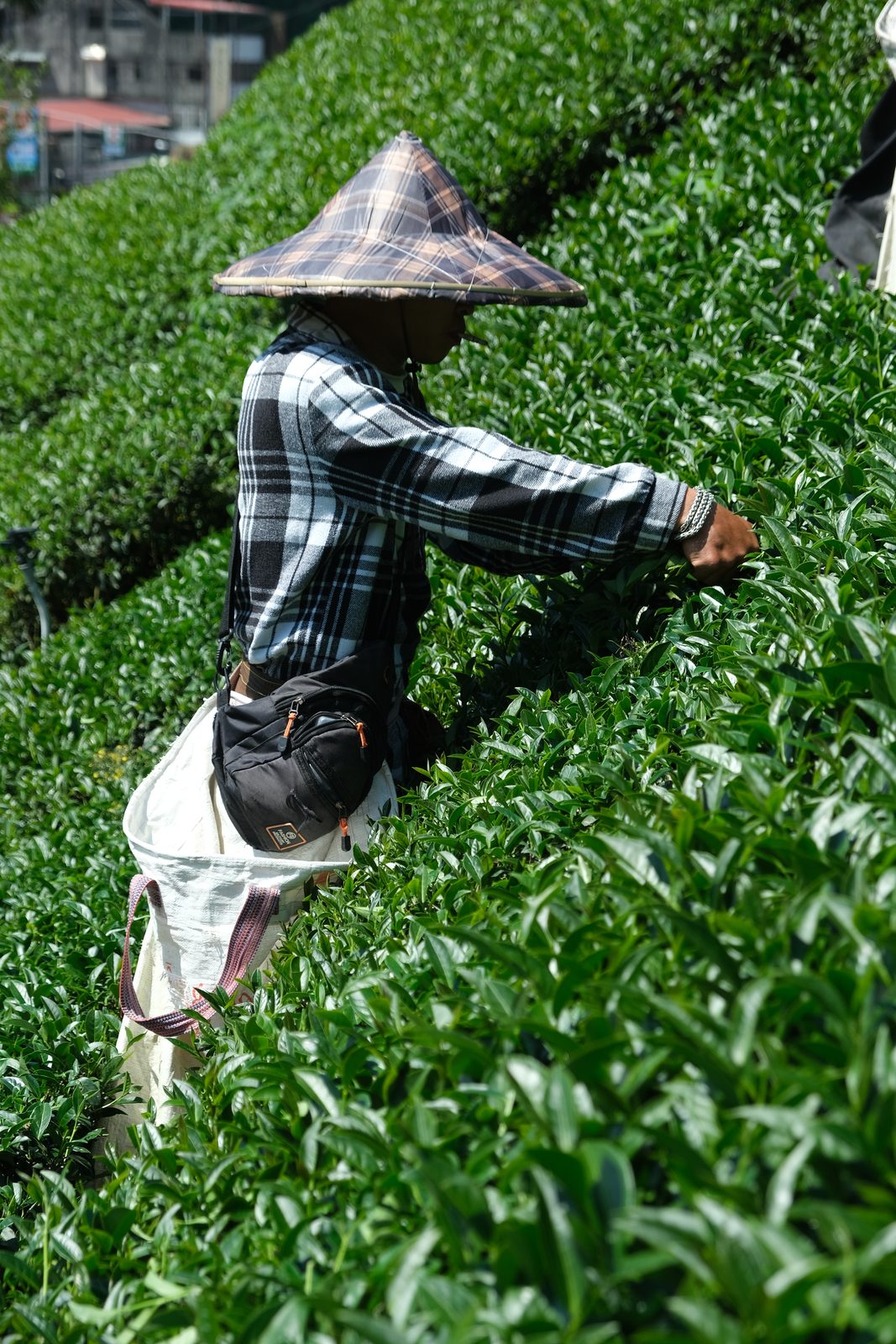
The pickers move along the rows in bamboo hats, baskets on their backs. Oolong is not picked like green tea — instead of the youngest buds, we take leaves that have just fully opened, at exactly the right maturity: thick enough to carry the aroma precursors that withering and oxidation will later transform. Which leaf is ready and which needs another day lives entirely in the pickers' decades of hand-feel.
Sun Withering
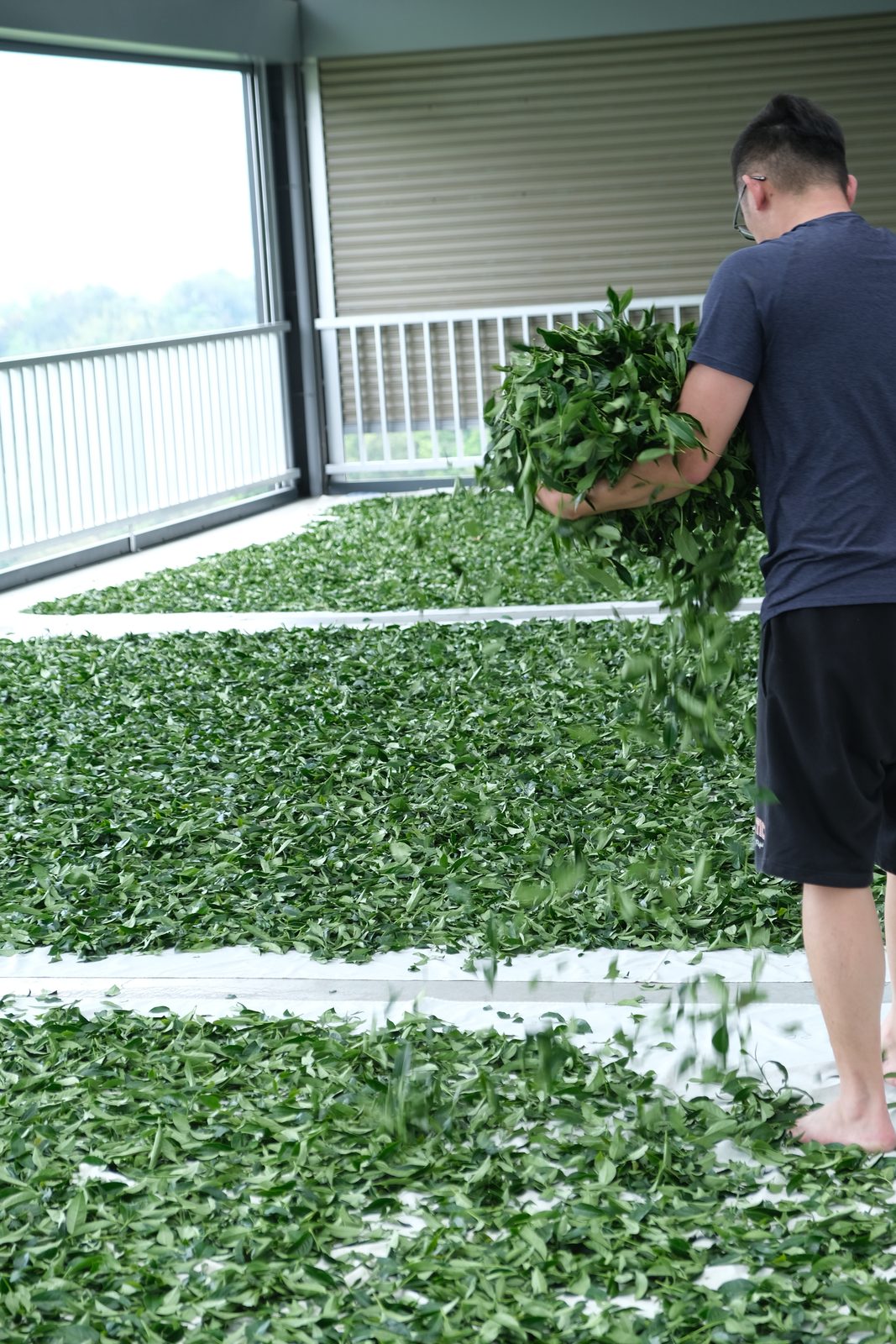
First stop down the mountain: the leaves are scattered evenly across an airy withering floor for a gentle sunbath. The sun's warmth starts the moisture moving — a process tea makers call 'walking the water' — and softens the leaf. Armful by armful, the leaves are spread, turned, and spread again; how long depends on the day's sun. Too much and the leaves bruise; too little and the water won't move.
Indoor Withering
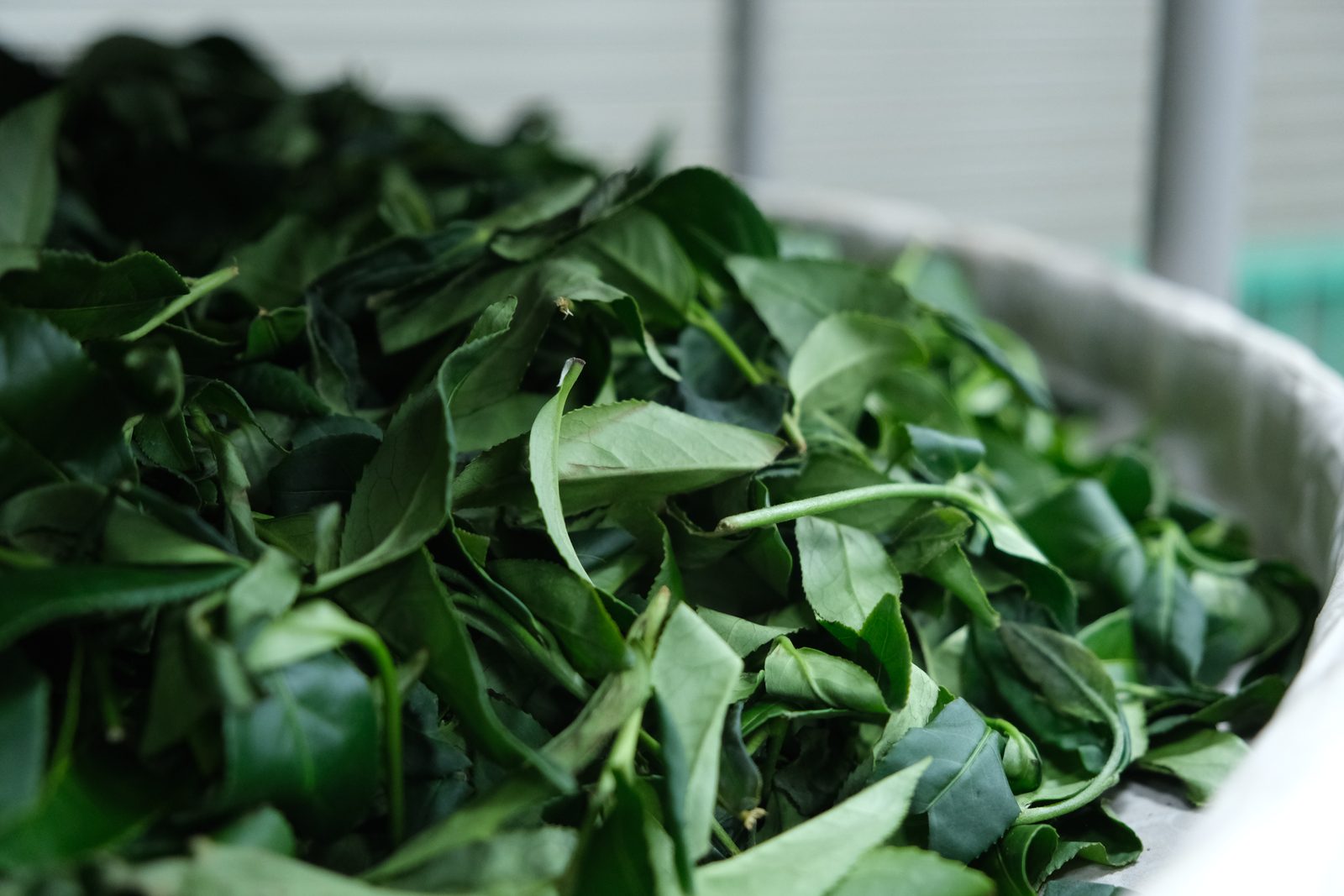
After the sun, the leaves move indoors to rest, the water still walking slowly. It is a quiet wait: cells along the leaf edges begin to change, the raw grassy note retreats, and the first hint of a fresh, fermenting fragrance appears. Hours in which nothing seems to happen — and in which the entire foundation of the flavour is quietly laid.
Tossing
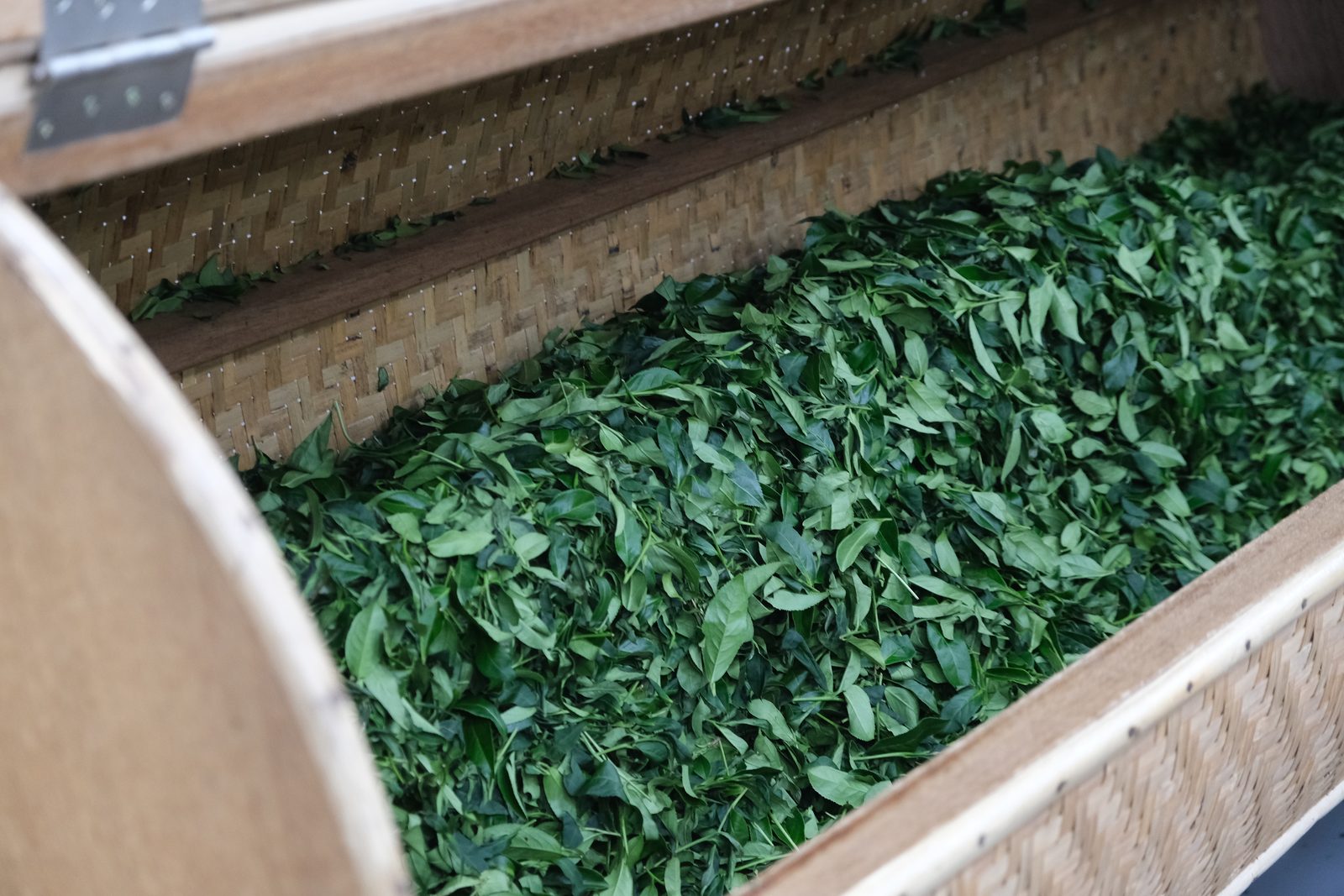
Resting and tossing alternate through the whole night. Inside the bamboo tossing drum the leaves tumble gently; their edges bruise ever so slightly, meet the air, and oxidation begins — the origin of oolong's famous 'green leaf with a red rim'. Toss, rest, toss again, deep into the night; with every round the aroma turns a layer, from fresh grass to flowers to a hint of fruit. When to toss and how hard is decided by nose and judgement, all night long.
Kill-Green
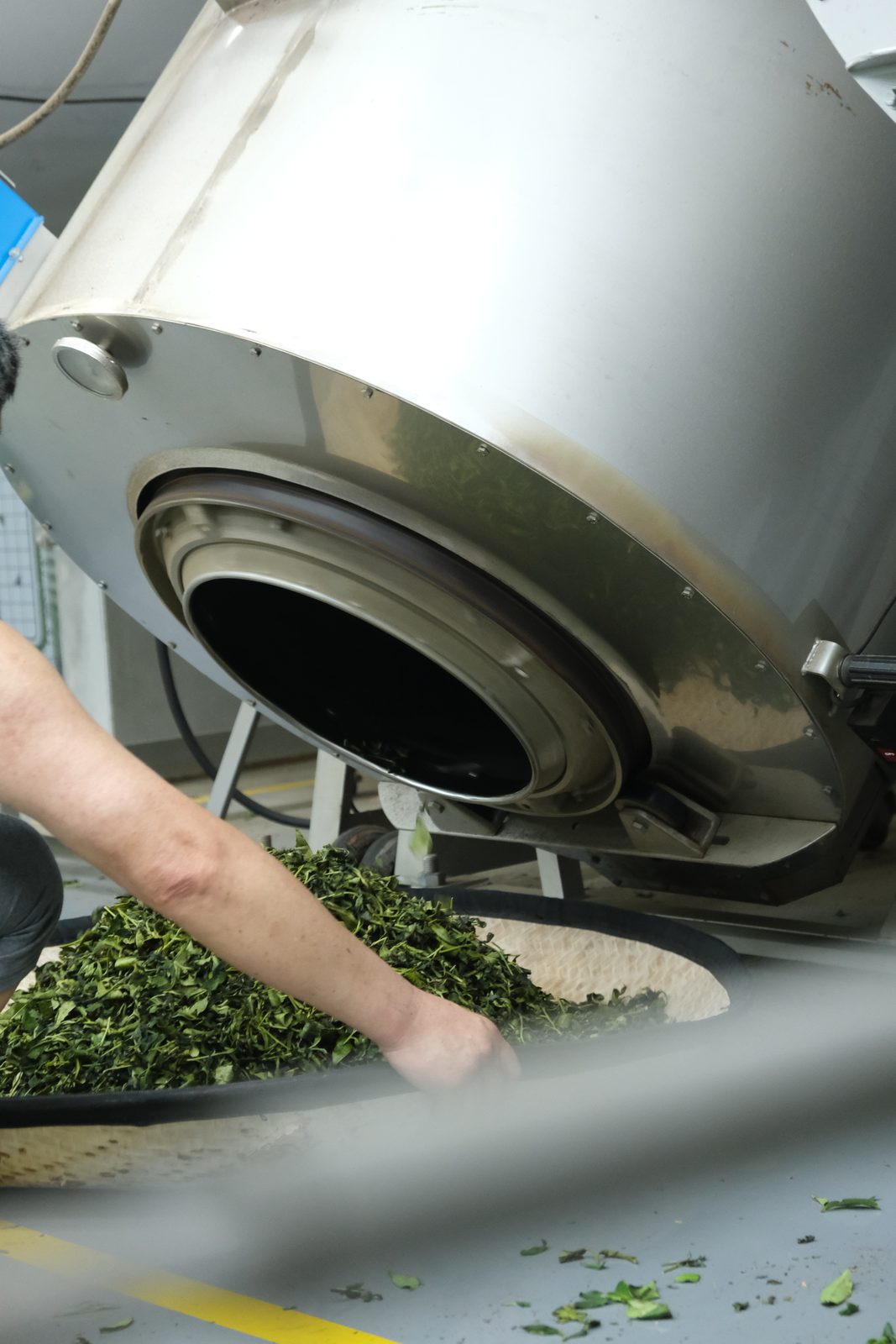
The instant the aroma reaches its most beautiful point, the leaves go into the kill-green machine. Pan heat around three hundred degrees instantly halts the enzymes; oxidation freezes, and that moment's fragrance is locked into the leaf. A step early and the aroma hasn't opened; a step late and it's overdone — the stage most like cooking, where the fire decides everything. The leaves come out soft and toasty-sweet, ready for shaping.
Rolling
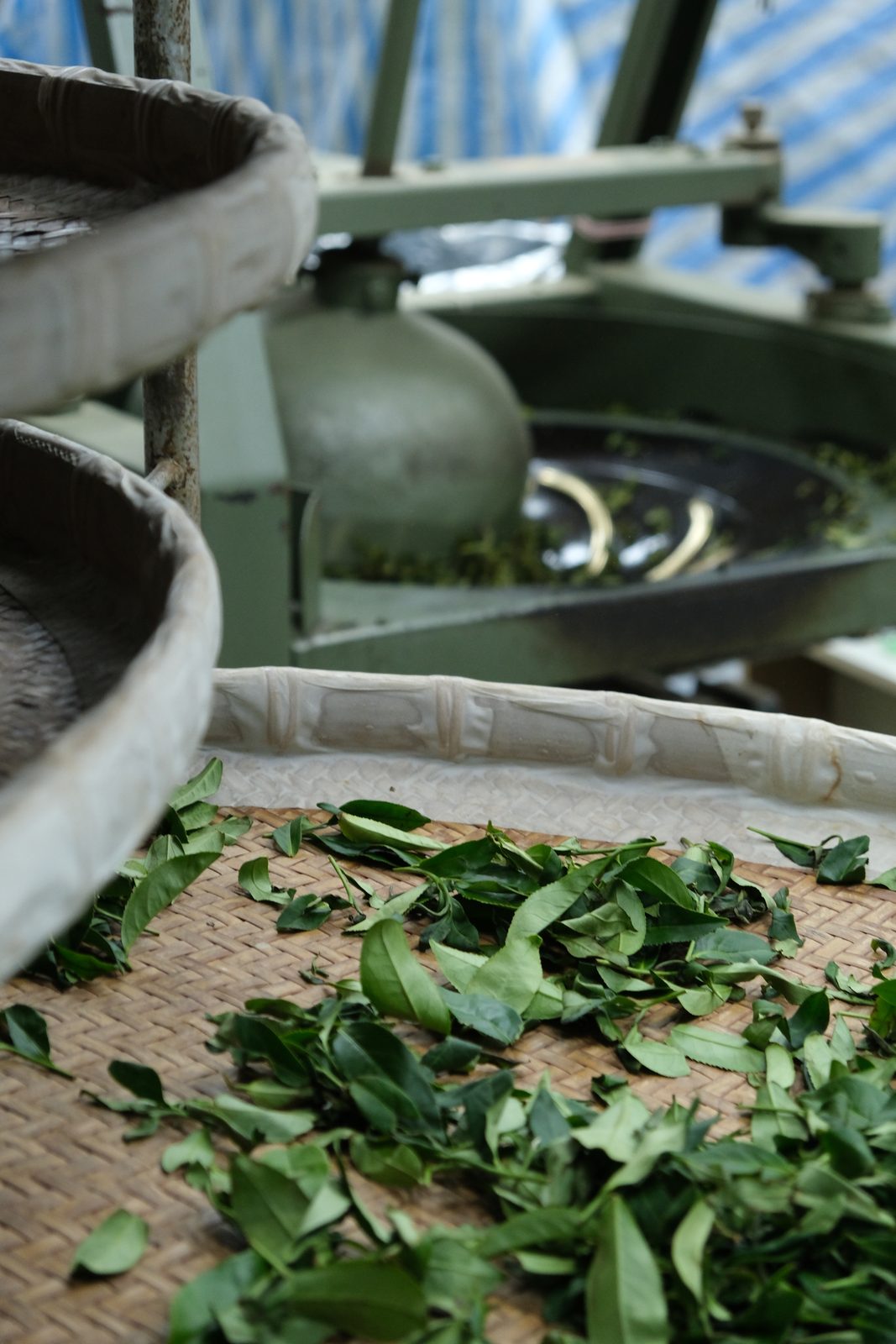
Straight after kill-green, while still warm, the leaves are rolled. The machine's pressure curls the leaf and gently breaks the cell walls, coating the surface with tea juices — setting the rhythm at which flavour will release in your pot. Between rolling and loosening, the leaves return to the bamboo trays to catch their breath, smaller and more concentrated each round.
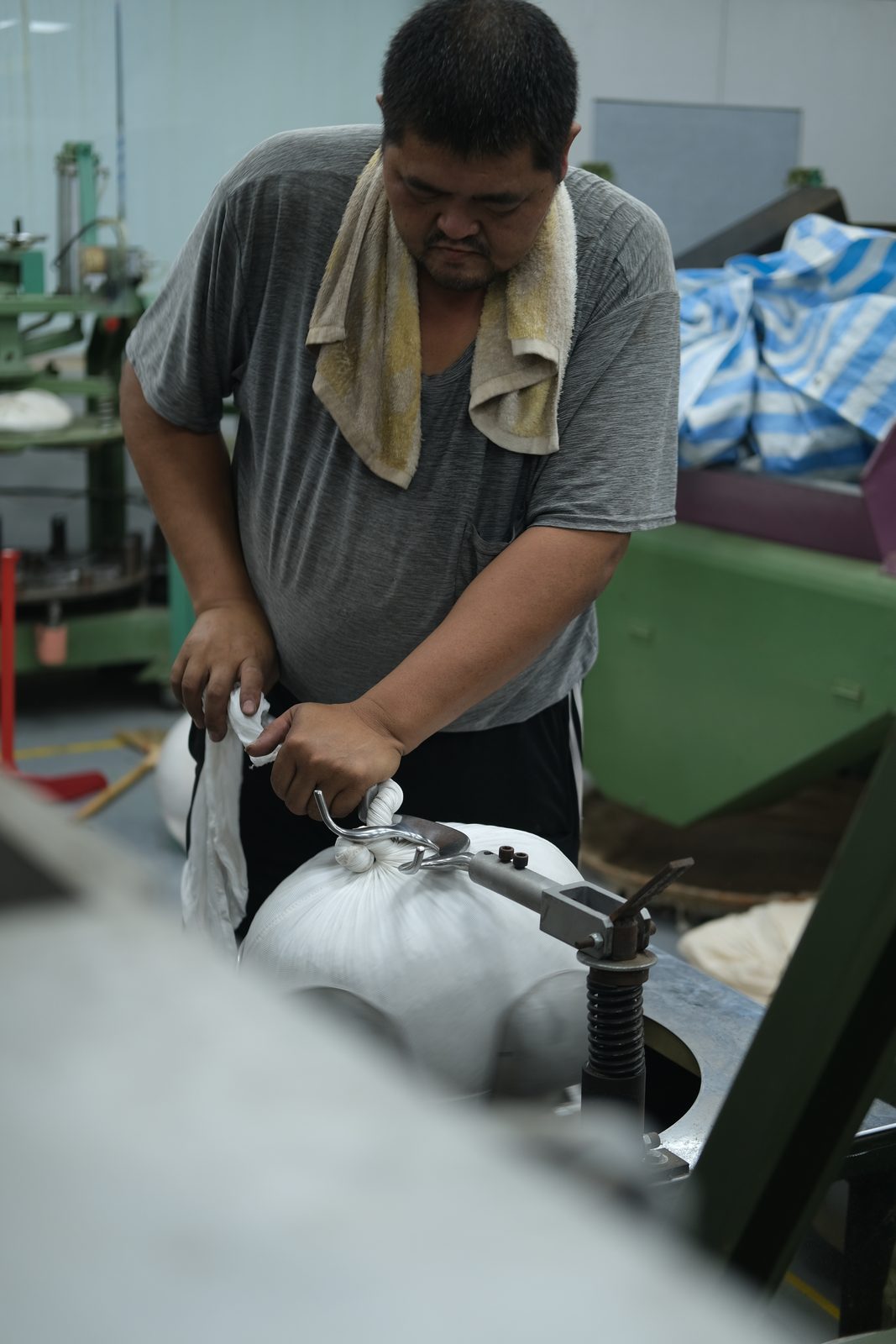
Ball Rolling — Shaping
Oolong's most labour-intensive step. The leaves are wrapped into a tight cloth ball, pressed and rolled by machine and by hand, opened, and wrapped again — dozens of cycles until each leaf curls into the familiar half-sphere. A tight roll locks in the flavour and stands up to steep after steep. Ball after ball, twisted closed by hand, for the better part of a day.
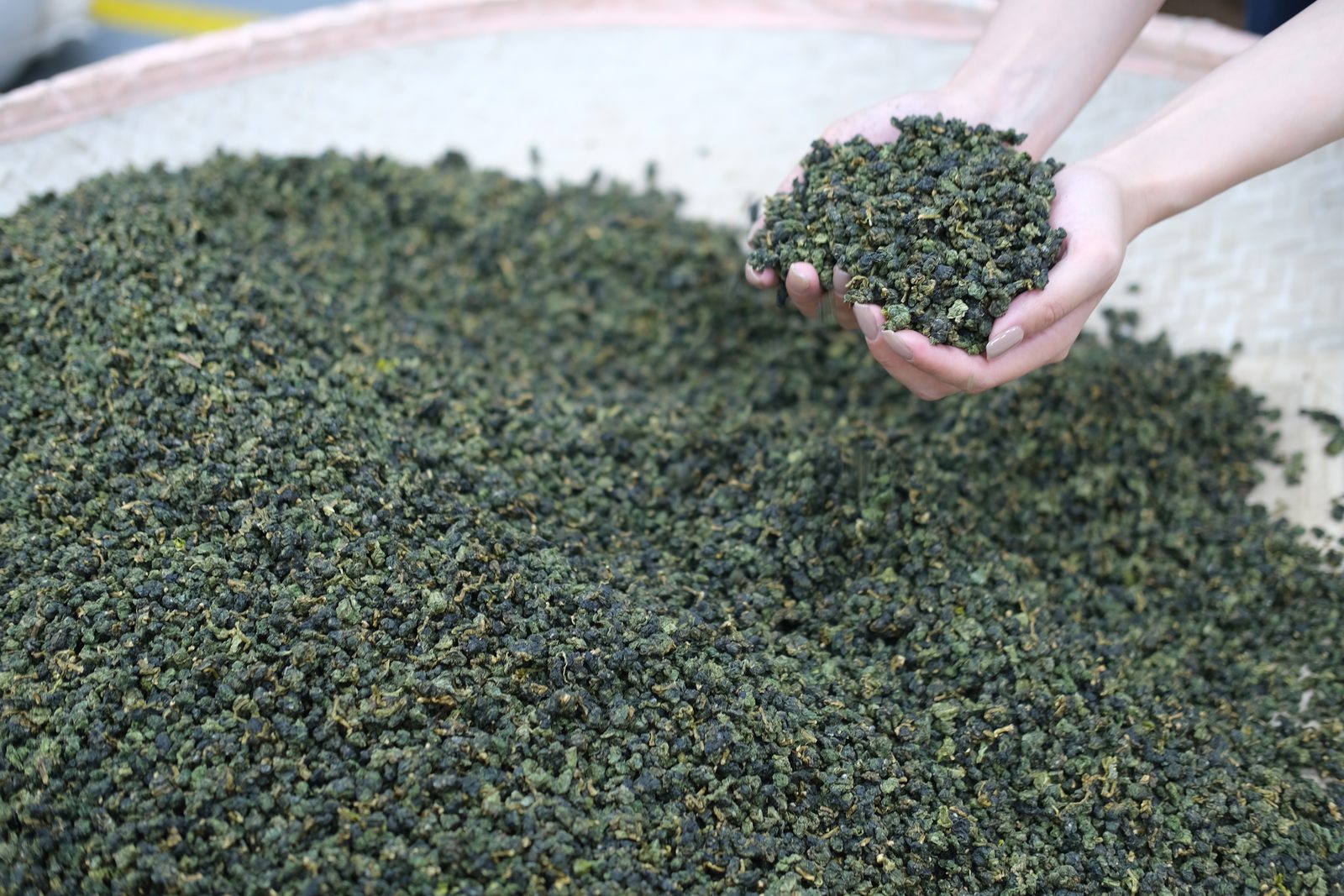
Drying
Finally, slow low-temperature drying brings the moisture down for long keeping, sealing the flavour in. Scoop up a handful of the finished rolled tea: it sits heavy in the palm, warm and toasty to the nose. From a glossy leaf on the morning branch to this dense little sphere — a full day and night, with the lights on the whole way.
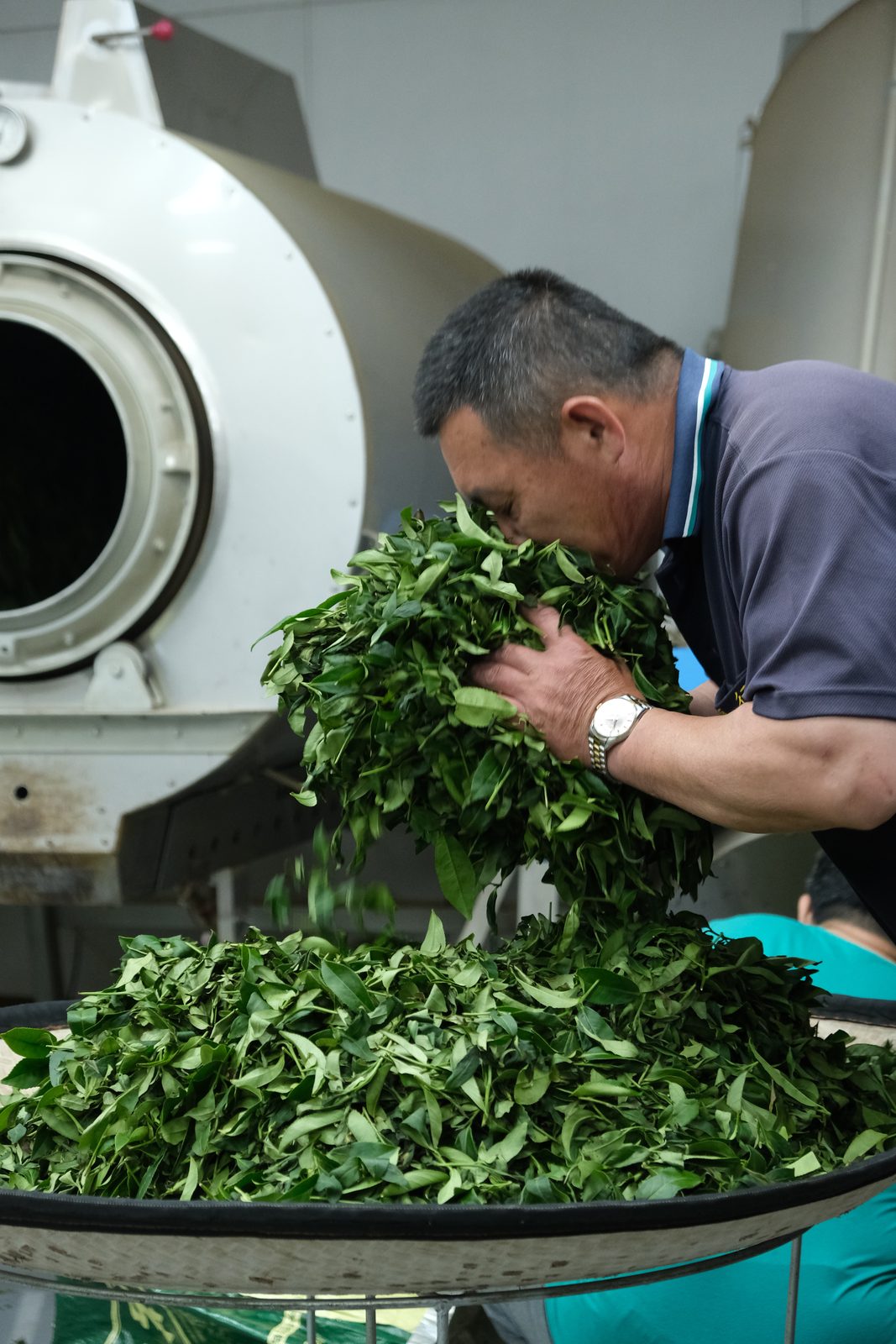
Dad's Call
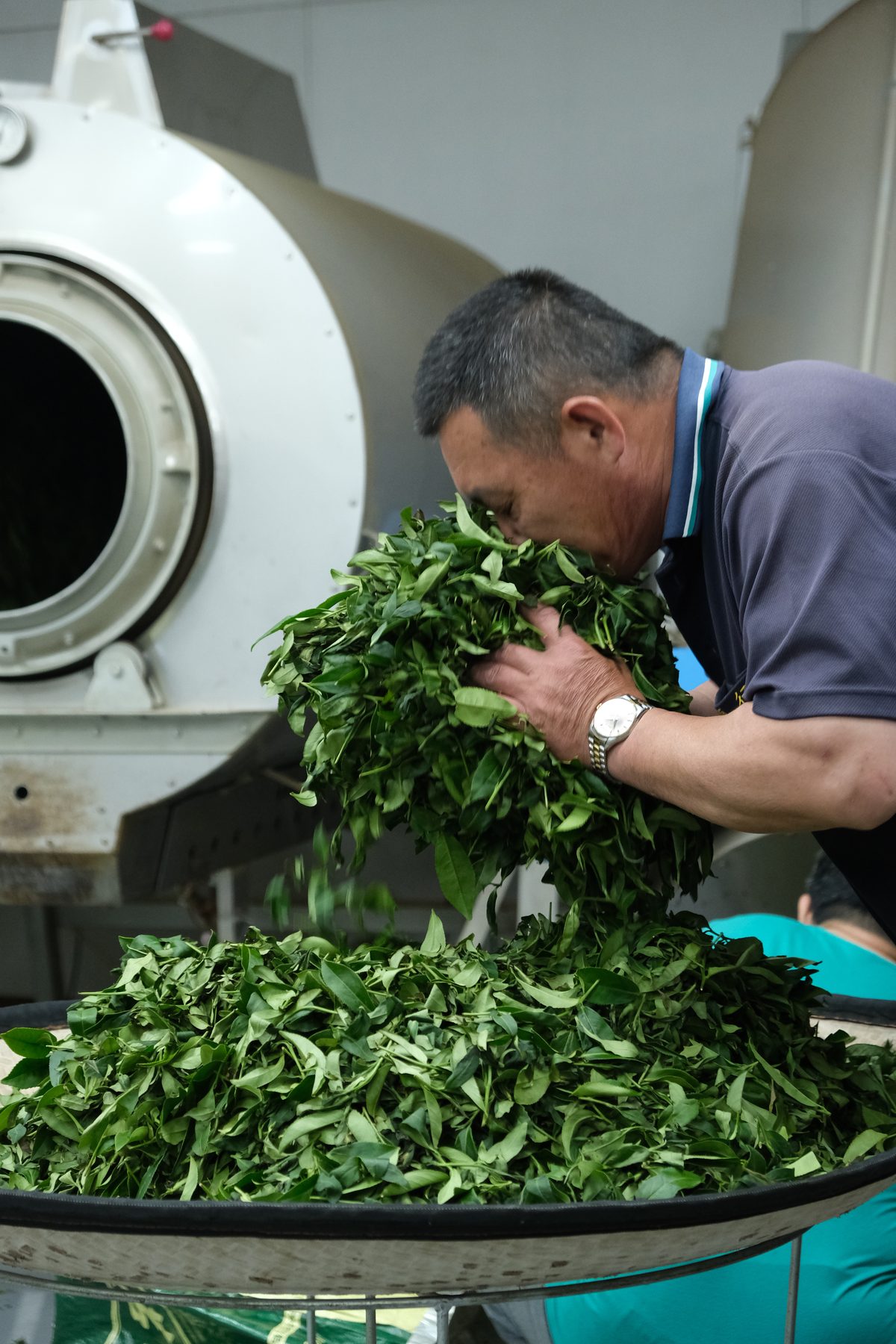
The scene we saw most often all day: Dad gathering an armful of leaves and burying his face in them for one long, deep breath. How far the oxidation has come, whether the aroma has opened, whether to toss again or wait — instruments give numbers, but the call is made by decades of that one breath. Tea makers say you 'read the tea, then make the tea': every batch is different, and weather, humidity, and the hour of picking rewrite the answer to every step that follows.
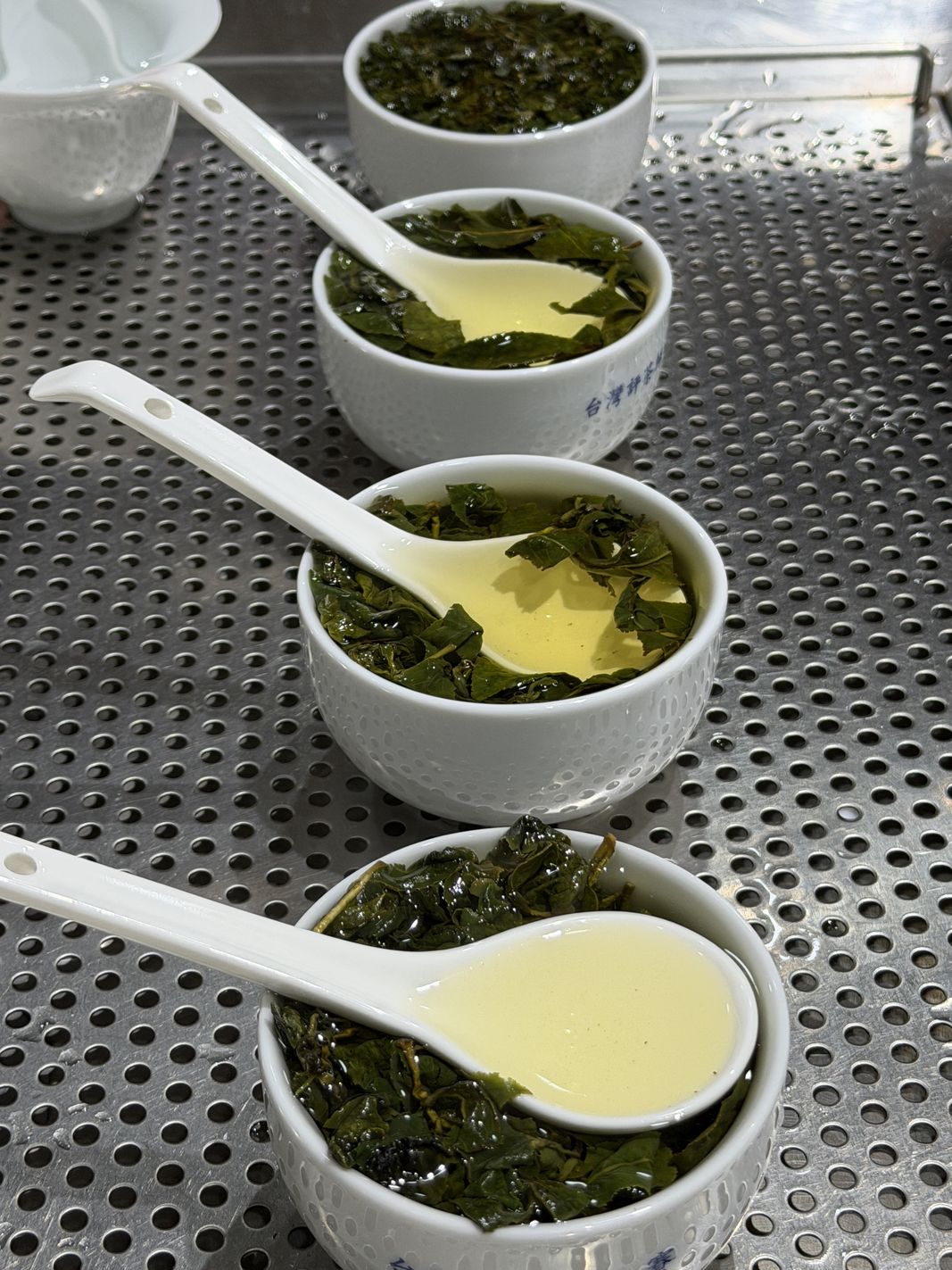
The First Tasting
The most honest test of a finished tea is to brew it. Measured into tasting cups and lined up in a row, the leaves unfurl and the liquor sits golden and bright; we work down the line, a porcelain spoon at a time. It is the taste of this whole day's work — and the homework for the next batch. Is the body full, does the finish linger, did the mountain's fragrance survive the journey? One sip answers everything.
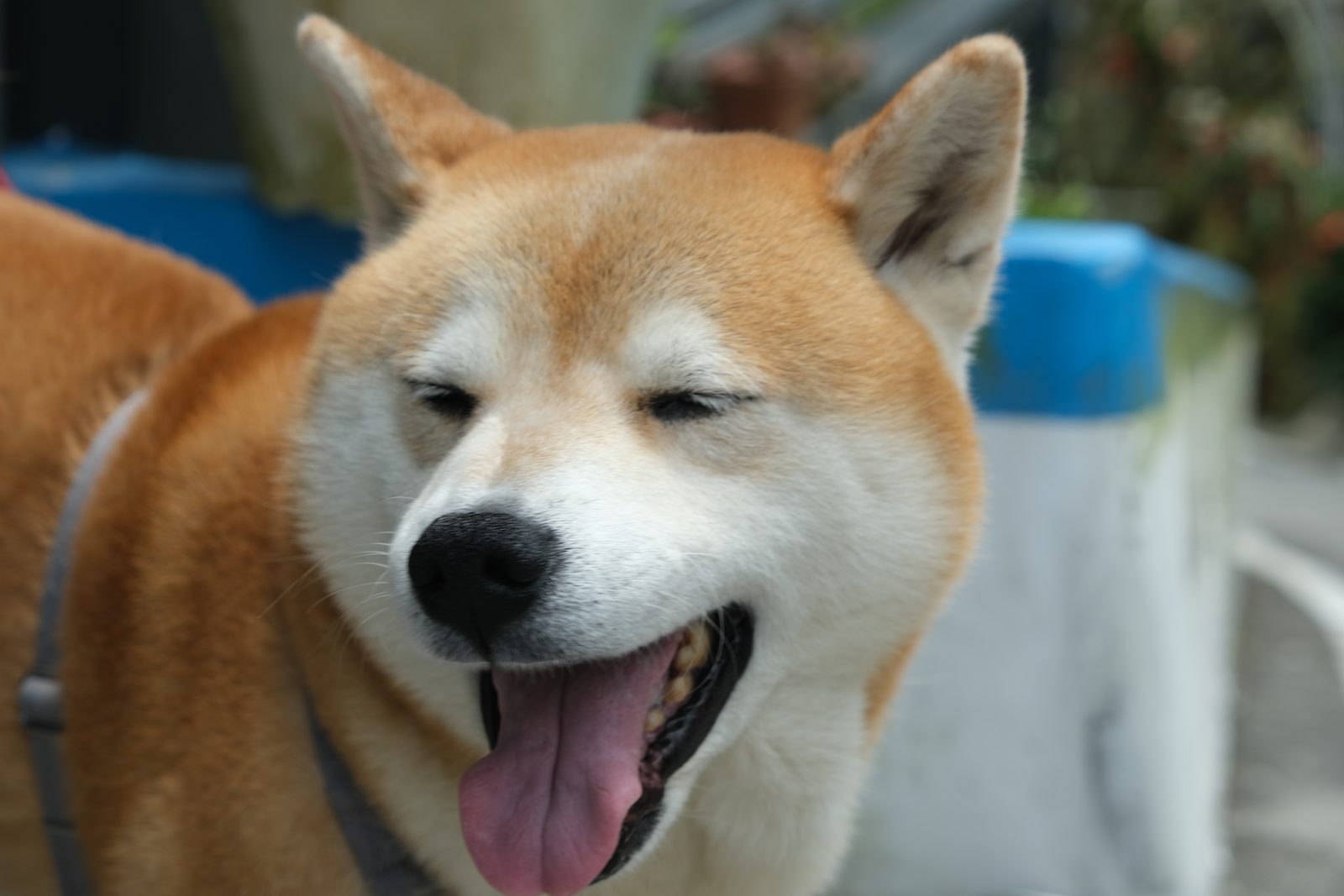
Assistant Photographer: Kuji
Kuji is our family shiba inu, and he came up the mountain with us. He spent the day supervising from the factory doorway — no opinions on tea making, strong opinions on walks and lunch. We took over a thousand photos that day, and nobody in them smiles bigger than he does. He probably thinks the whole trip was arranged for him.
And Then, It Reaches Your Cup
After a leaf's long day, the best sequel is a pot of hot water to wake it up.