Where Is Alishan? Meeting Taiwan's Mountain of Mist and Forest
A grove of thousand-year cypress, a little train that climbs the mountain, and a high-mountain oolong that's remarkably easy to love.
Plenty of people have heard of Alishan without being able to point to it on a map. It isn't a single peak, but a whole cluster of them. It sits in Alishan Township, Chiayi County, spilling into the neighbouring townships of Meishan, Zhuqi and Fanlu, all part of the Alishan mountain range. The whistle of a dawn train, cherry trees beside the platform, a valley slowly filling with cloud, Alishan holds almost everything Taiwanese people picture when they talk about heading up the mountain.
So where exactly is Alishan?
Administratively it belongs to Alishan Township, the largest township in Chiayi County, reaching north and west toward Meishan, Zhuqi and Fanlu. Geographically it's the Alishan range, which averages around 2,000 metres; its highest point, Datashan, reaches 2,663 metres, facing the even taller Yushan range across a river valley.
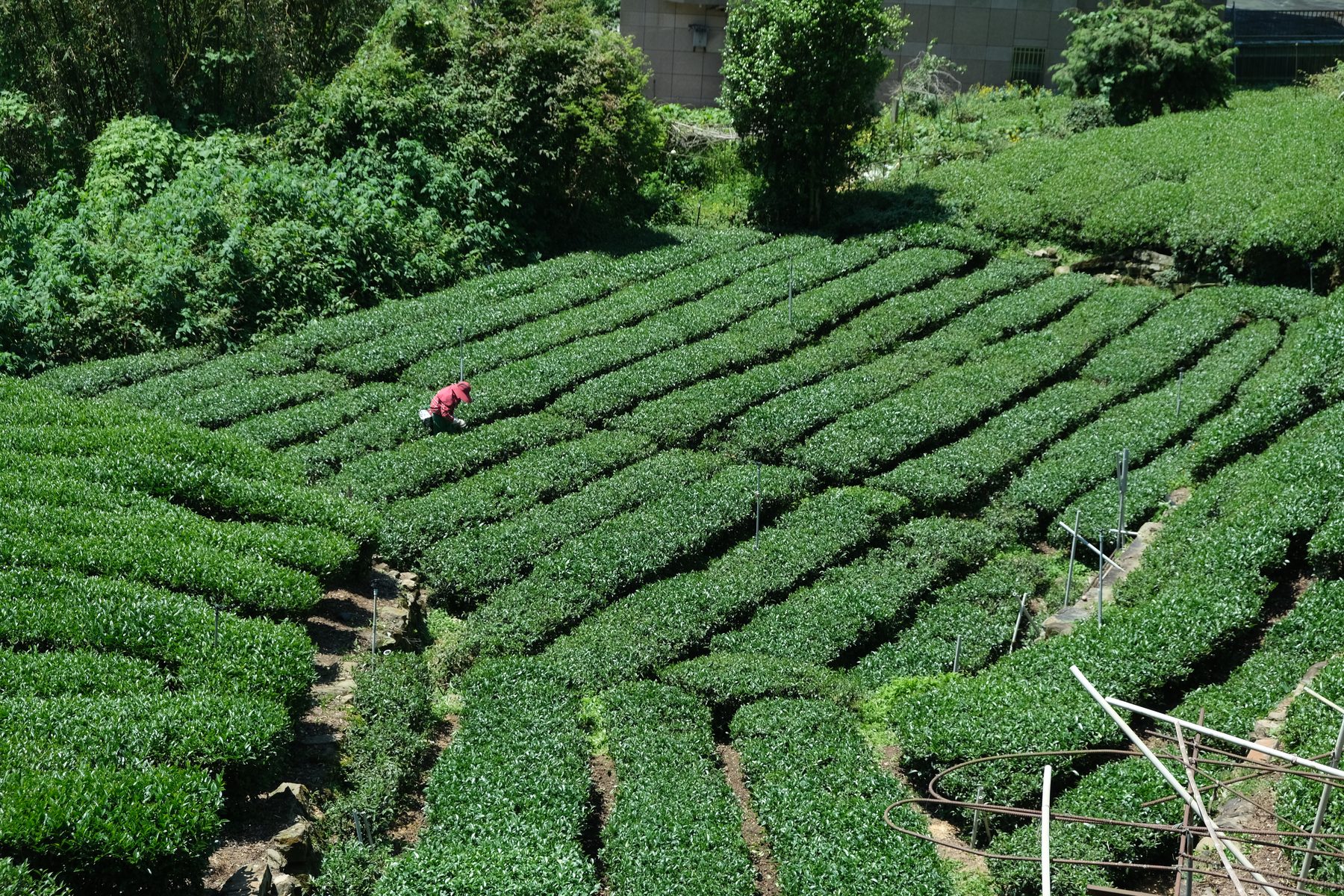
The word Alishan really covers two things. One is the Alishan National Forest Recreation Area, up above 2,000 metres, where people go for the sunrise and the ancient trees. The other is the lower tea country, roughly 1,000 to 1,600 metres, which, together with Lishan and Shanlinxi, is one of Taiwan's three great high-mountain tea regions.
The Five Wonders: sunrise, sea of clouds, sunset, forest, railway
Older folk speak of Alishan's Five Wonders: sunrise, sea of clouds, sunset, forest and railway. Before dawn, visitors board a little train up to Zhushan to wait for the first light to break over the ridge; by day they walk into groves of red cypress and look up at trees tens of metres tall that have lived a thousand years or more; the evening closes with a wash of sunset.
That climbing forest railway, winding up from the city of Chiayi, is a childhood memory for many. From mid-March to mid-April, Yoshino and mountain cherry take turns blooming along the tracks, and the platforms turn softly pink.
Why Alishan tea is so easy to drink
Alishan spends much of the year wrapped in mist, which filters the sunlight soft, and the moderate swing between day and night temperatures lets the tea bushes grow slowly and unhurried. That climate gives Alishan tea its character: a gentle floral fragrance, smooth and quietly sweet.
Next to Lishan tea, grown higher and fuller and bolder in aroma, Alishan is softer and more approachable. If this is your first high-mountain oolong and you're worried it'll be too bitter, too strong or too complicated, Alishan is a very gentle place to begin.
Alishan Is a Perfect First Sip
Sunrise Tea's own Alishan garden sits between 1,400 and 1,600 metres, planted with qingxin oolong. Each harvest my father stays up at the mountain tea factory, watching the fresh leaves come in batch by batch, deciding when to pick and when to roast, and many of the photos here come from those few days of tea-making. If you'd like a soft opening for your first taste of high-mountain tea, start with a cup of Alishan misty oolong: the floral note is light, the sweetness is the kind that returns on the finish. Easy to meet, and easy to remember.