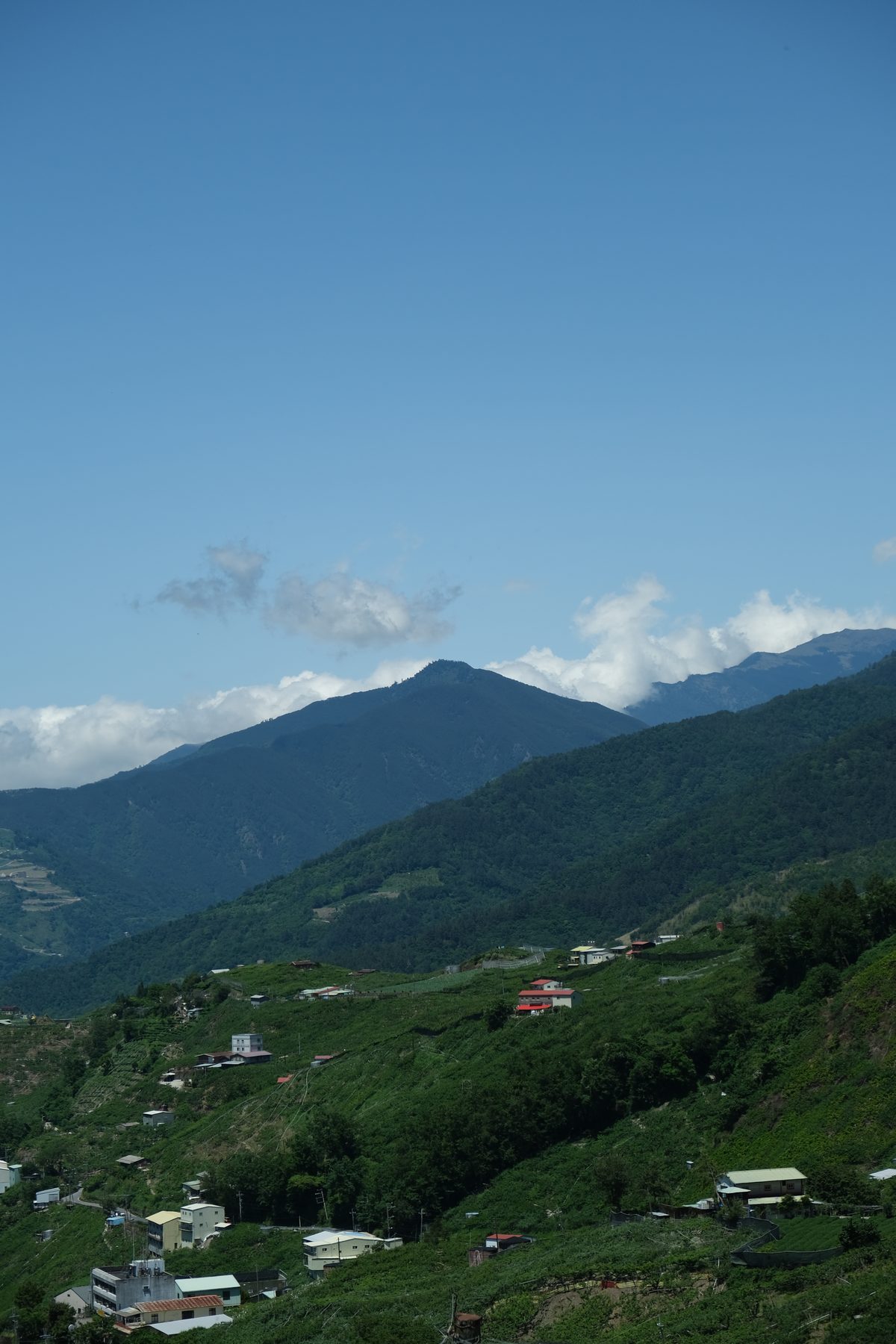
Where Is Lishan? Meet Taiwan's "Little Switzerland"
A cloud-wrapped farm country on the Central Cross-Island Highway — where good mountains grow good fruit, and good tea.
Drive out of Taichung city and up into the mountains along the Central Cross-Island Highway, and the road keeps climbing, slipping in and out of the clouds. The roadside trees give way to apple and peach orchards, the air turns cooler, and when the altitude reads close to 2,000 metres, you have arrived in Lishan. It is not somewhere you reach on a casual day trip — but it is the true home of a lot of good Taiwanese things.
First things first: where exactly is Lishan?
Many people assume Lishan is in Nantou or Hualien. In fact it belongs to Taichung's Heping District, tucked into the Central Mountain Range beside the Central Cross-Island Highway. The Lishan village itself sits at roughly 1,900 to 2,000 metres, and it is one of the earliest-developed and liveliest high-mountain settlements along that highway.
Its neighbours are high-altitude farms like Wuling Farm and Fushoushan Farm — the latter climbing to between 2,100 and 2,614 metres, a rare height for a farm in Taiwan. This whole stretch of mountains is, quite literally, where Taiwan lives above the clouds.
Why do people call it "Taiwan's Little Switzerland"?
Let's be honest: this isn't an official title, just a nickname travellers gave it. One visit and you'll understand why. It stays cool all year, mist drifts up the slopes in waves, and those slopes are lined with temperate orchards and cool-climate vegetable plots, with the ridgelines of Hehuanshan and Xueshan stretching out behind. That high-mountain farm-country atmosphere reminds people of the Alps, and the "Little Switzerland" image simply caught on. (Qingjing Farm gets called the same thing, which tells you how similar our idea of alpine countryside really is.)
The point isn't whether it truly resembles Switzerland. It's that any place you'd describe this way is born with a fine set of temperate, high-mountain conditions.
The same high altitude grows peaches — and grows good tea
Lishan first made its name for fruit and vegetables. With big day-night temperature swings and plenty of sunlight, the fruit trees build up their sugars slowly, so peaches from Lishan and Fushoushan turn out especially sweet and juicy, and apples, pears and persimmons are local signatures too. Even the cabbage, grown slowly in the cool thin air, comes out crisp and sweet.
That same high altitude and the same daily temperature swing show up in the tea trees as what growers call shan-tou-qi — the character of the mountain. Most of the Lishan tea gardens sit above 2,000 metres, making this one of Taiwan's highest tea regions. The trees grow slowly, the leaves are thick and rich in pectin, and the resulting tea is full-bodied and clean in aroma — and it stands up to many infusions, still giving flavour several steepings in. Good mountains growing good things: it's the same logic for the tea as for the fruit.
Our own Lishan tea garden at Sunrise sits between 2,000 and 2,200 metres, planted with Qingxin Oolong, hand-picked and cloth-rolled. My father tends it up there, reading the weather — and the clouds — to decide which day the picking begins.
Start With Lishan
So next time someone asks "where is Lishan?", you can tell them: up the cross-island highway from Taichung, into the clouds, on a mountain that raises peaches, cabbage and fine tea side by side. And if you've never really tasted a high-mountain oolong, Lishan is a lovely place to start — brew a cup of our Lishan High-Mountain Oolong, and let that cool, sweet-returning mountain flavour introduce you, slowly, to Taiwan's "Little Switzerland."