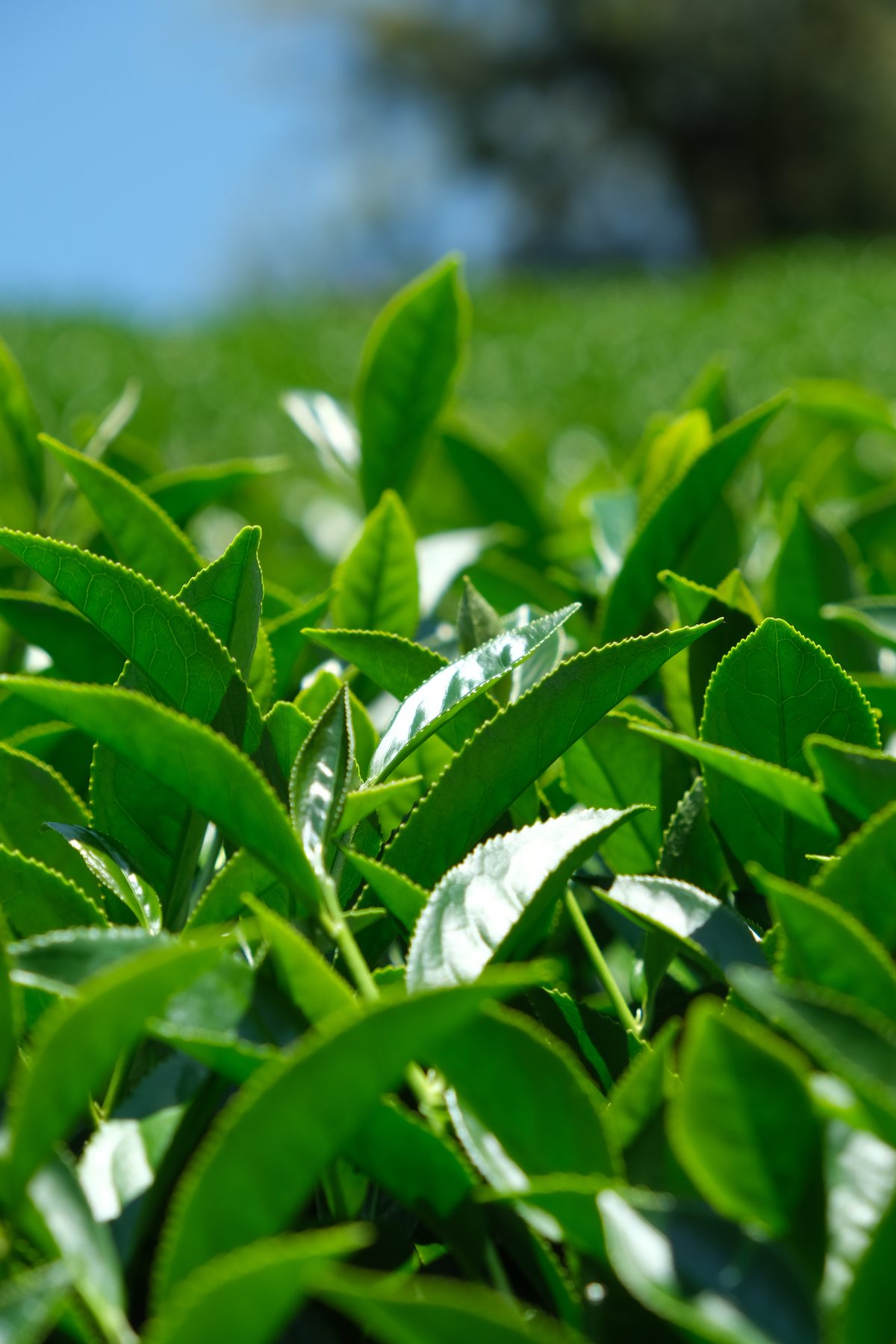
Why Does High Mountain Tea Taste So Sweet?
No harsh bitterness, a clean sweet finish, a cool lingering note — it all comes down to what the mountain's daily temperature swing does to the leaf.
First-time drinkers of high mountain tea often pause: it's tea, but it isn't really bitter — instead there's a gentle sweetness, a silky feel, and a cool, lingering fragrance at the back of the throat. It isn't your imagination, and it isn't mysticism. The answer is up on the mountain — in the temperature gap that opens between day and night, and in the hours when mist drifts through the garden. Here's the science, in plain words.
When the plant grows slowly, the sweetness stays
High mountain tea generally means tea grown above roughly 1,000 metres. The higher you go, the wider the swing between day and night temperatures. By day the sun drives photosynthesis and the plant builds up sugars and amino acids; at night the cold slows the plant's respiration right down, so what it made during the day isn't burned off — it accumulates, little by little, in the leaf.
Growing slowly turns out to be a good thing. Given more time, the leaf stores more theanine — the amino acid behind that sweet, savoury note — while catechins (the source of bitterness and astringency) and caffeine end up relatively lower. There's an enzyme in the plant that converts sweet theanine into bitter catechins, and it's most active in warmth and strong light. Up where it's cool and the sunlight is soft, that conversion slows down, and the sweetness is preserved. That, in short, is why high mountain tea tastes sweet and gentle rather than sharp.
The mist does a lot of the work
The other classic mountain scene is cloud and mist wrapping the ridges. Don't underestimate that layer — it acts like a natural softbox, scattering the direct sun and strong UV so the light reaching the leaf is gentler. With softer light, bitterness-prone catechins are held down a little further, while aroma and amino acids are kept more intact. Gardens that see plenty of mist tend to brew a softer, more fragrant cup.
Thick leaves, a silky body, and that mountain character
Cool air and slow growth also make the leaves grow thick and fleshy, rich in pectin. That's what gives the liquor its smooth, full, almost gel-like body — and it's why the leaves stand up to steeping after steeping and still give flavour.
Put it all together and you get what seasoned drinkers call shan-tou qi, the 'mountain character' — that clean, brisk freshness unique to high elevation, with a faint cool, mineral breath to it. What it really describes is terroir: the sunlight, moisture, soil and surrounding plants of one particular mountain, all written into the cup.
From the Mountain to Your Cup
Our own gardens sit right at these heights — Lishan at 2,000 to 2,200 metres, Alishan at 1,400 to 1,600 — planted with qingxin oolong. From hand-picking on the slope to the firing and rolling, every step passes through my father's hands, which have been making tea for the better part of a lifetime. Next time you brew a cup, don't rush the first sip — let the sweetness settle at the back of your tongue. What you're tasting is a whole mountain at dawn.