Why Does High Mountain Tea Cost More?
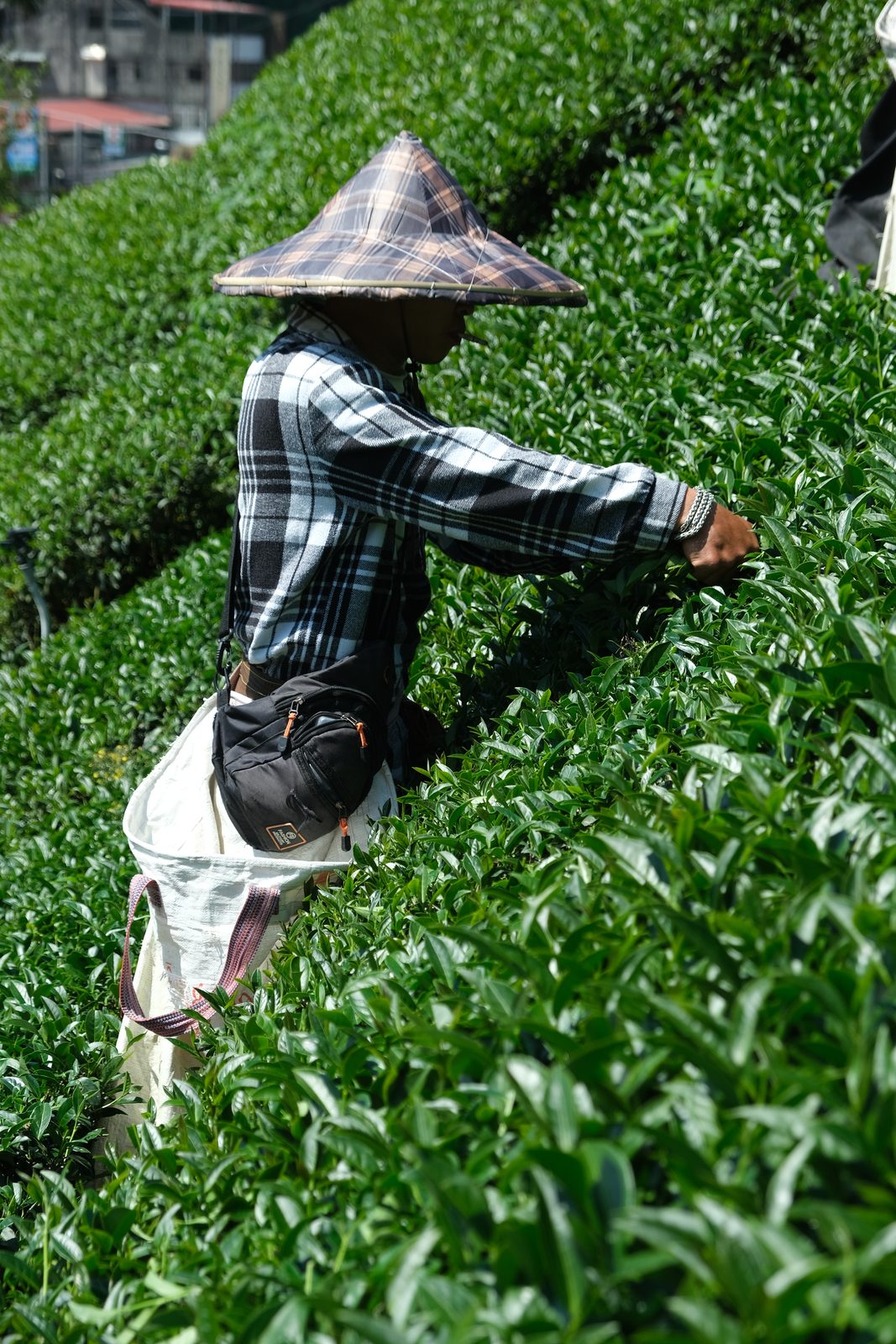
Two or three harvests a year, every leaf picked by hand, and a full night of tending after that.
It is all oolong, so why does the high mountain one cost more? We are asked this often, and the answer isn't complicated: it is in how many times a year a garden can be picked, in how the leaf is taken, and in the night that follows. Here is how it works in our own gardens.
- Lishan harvests
- Three a year: spring, autumn, winter
- Alishan harvests
- Two a year: spring and winter
- Picking
- Entirely by hand
- Processing
- Runs overnight; someone stays up tending and smelling the leaf
- Our gardens
- Lishan 2,000–2,200 m, Alishan 1,400–1,600 m, planted with Qingxin oolong
Only two or three harvests a year
Lowland tea bushes grow fast and can be picked several times a year. Up the mountain it is cold, the plant grows slowly, and the leaf takes longer to fill out — which is why high mountain tea tastes sweet, and why there is less of it. Two sides of the same fact.
Our Lishan garden is picked three times a year: spring, autumn and winter. Alishan, twice: spring and winter. When a season is done, it is done. The mountain doesn't grow an extra batch because orders came in; it keeps its own pace.
So this plot, at this altitude, in this season, yields what it yields and no more.
Every leaf picked by hand
Everything we grow is picked by hand. Hand-picking holds the quality — the picker can see which shoot to take and which to leave, and works through the bush leaf by leaf.
At the fresh-leaf stage the difference looks small. Once the tea opens in the pot it is all there: whole leaves, a clean cup, and more infusions before the flavour fades.
Hand-picking takes people, and people are a cost. That part of the price is the hours spent bent over on a mountainside.
And then there is the night
Picking is only the beginning. The fresh leaf is withered in the sun, then indoors, tossed and rested in rounds, then fired, rolled, cloth-rolled and baked.
None of those steps runs to a fixed clock. If today's leaf holds a little more water, or the humidity on the mountain is higher, the withering has to stretch. The judgement comes from the nose and the hands, not a timer. So through the making days nobody really sleeps — someone has to stay with it, smelling each round, deciding when it moves on.
The cloth rolling takes the most work: the tea is bundled in a length of white cloth, squeezed tight, opened out, and done again dozens of times, until the leaves curl into firm beads that hold their fragrance.
Where the price comes from
Two or three harvests a year, every leaf taken by hand, and a whole night of tending after that — put together, that is most of what the price is. Our tea comes from our family's own gardens, grown and roasted entirely in-house. We have done this work ourselves, so we can tell you where the price comes from.